
Ans: No, MDPE pipes makes sure that the water tatse remains the same and no chemicals get released in it.
Are MDPE Pipes Safe for Drinking Water?
MDPE pipes have started to gain global recognition because of its ultimate performance in water supply. From being valued at just $5.44 billion in 2023 to a new estimated value of $7.91 billion by 2034, it keeps growing each day.
It’s true that MDPE pipes have now become the future of water supply infrastructure and in the upcoming times they will completely replace iron or concrete pipes. But people still often wonder if they are completely safe or not.
So, in this article I’ll be mentioning some questions that you might have like are MDPE pipes safe for drinking water and other such related questions. Let’s get started.
What Are MDPE Pipes?
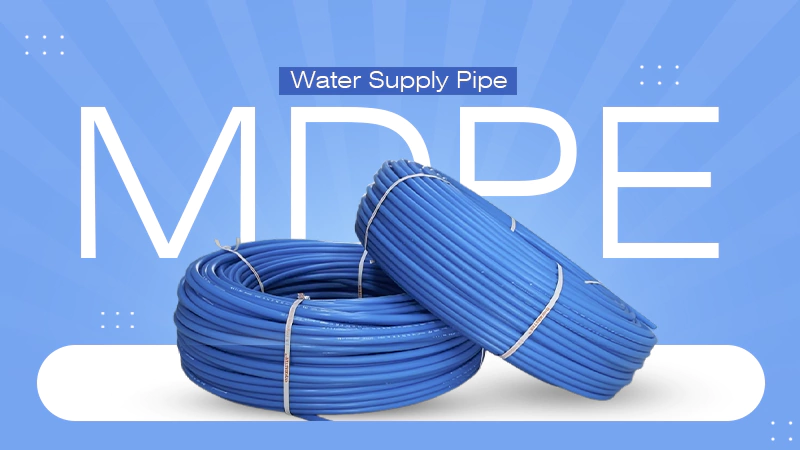
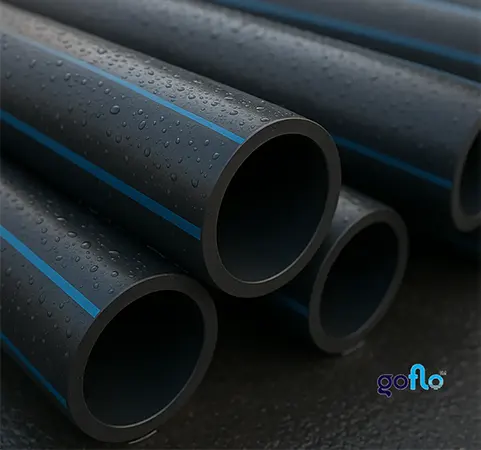
MDPE (Medium Density Polyethylene) pipe is a fairly flexible yet strong type of thermoplastic pipe. This pipe is commonly used in water supply systems, and particularly in locations needing high reliability and resistance to damage.
Compared to metal pipes, which are rigid and heavier, MDPE piping has the benefits of being much lighter, easier to install, and cost-effective, which is the reason they have been employed for potable drinking water within municipal and residential water delivery.
Are MDPE Pipes Safe for Drinking Water?
MDPE is a non-toxic food-grade material that was created to meet potable water requirements, therefore is safe and reliable in water supply systems. Unlike other plastics that may leach harmful substances, MDPE is manufactured to inhibit chemical migration (leaching) into drinking water.
The purity of the water will not be compromised. MDPE is non-toxic and there are no harmful contaminants released when water is present, providing long-term consumers with a safe drinking water supply.
MDPE also offers very good corrosion resistance, unlike iron or steel which rust, scale or corrode. In addition, the chemical stability of the material provides good overall leach characteristics allowing for clean, safe, and uncontaminated water for many decades of service.
How MDPE Pipes Ensure Water Quality
MDPE pipes enhance drinking water safety in three fundamental ways.
Reduced bacterial growth: Prior to installation, the smooth internal surface decreases the prevalence of biofilm that bacteria can inhabit.
Taste & odor: MDPE pipes do not lend any specific flavor or odor to the water supply, preserving it in a more naturally-fresh state.
Stability in varying conditions: Within the considerations of drinking water quality parameters, MDPE pipes maintain quality even when dealing with varying pressure or pressure fluctuations.
Certifications & Standards Ensuring Safety
MDPE pipes are certified through global agencies for a guarantee, both to the supplier, and the consumer, that the material is safe for drinking use. In the UK, for example, WRAS = Approved with regards to regulations means that the materials used are safe for distribution of potable water.
In The United States, NSF/ANSI = 61 Certified means the pipes do not leach harmful materials into the water supply, thereby maintaining public health and safety for drinking water. In this same vein, in India, the Bureau of Indian Standards has certification for local materials, thereby representing the approval of local, legal drinking water safety, etc.
MDPE pipes have been put through standards in Europe, North America, and Asia as a whole to be classified as safe and reliable for distribution lines for drinking water.
Scientific Studies & Research on MDPE Safety
Scientific evidence indicates that MDPE pipes are safe for drinking, as they do not leach any harmful chemical constituents into the drinking water supply. Laboratory studies indicate that MDPE does not leach any toxic materials under normal temperature and pressure, or that leaching of the pipe itself would pose no risk to drinking water safety.
Compared to older materials such as lead or galvanised pipes, MDPE water supply systems do not introduce dangerous heavy metals into drinking water, making this a healthier and more reliable material for use as a drinking water.
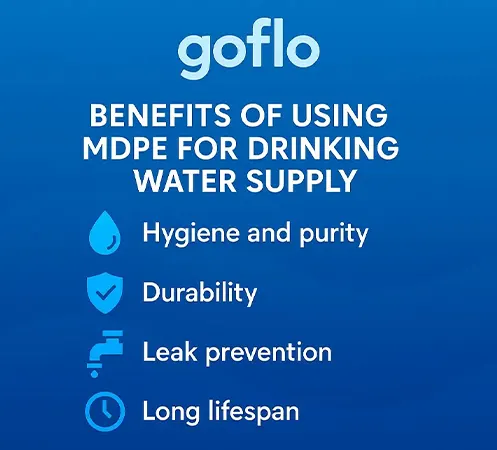
Benefits of Using MDPE for Drinking Water Supply
Now, it’s important to understand why MDPE is widely preferred, this is because of the benefits that come with it. This includes:
Hygiene and Purity
It ensures that the water is always clean and free of any contamination.
Durability
They are very durable and can withstand soil pressure, internal/external impact, climate change or anything else.
Leak prevention
Fewer joints and strong fusion welding minimize leakage
Long lifespan
Can last 50 years or more when installed correctly.
Limitations to Consider for Drinking Water Safety
MDPE pipes are generally considered safe for potable water applications, but certain conditions must be followed for long-term safety and performance. First, MDPE pipes are not suitable for hot water applications.
Generally, exposure to water temperatures of greater than 40–60°C can lead to a reduction in the structural integrity of the pipes over time. Secondly, MDPE pipes must be installed correctly, as poor welding and incorrect fittings will create durability or safety issues.
Finally, MDPE may be resistant to most environmental conditions, but extended exposure to sharp UV rays may weaken the pipe materials over time. Therefore, protective measures may be taken, such as shielding the pipes, to make sure performance will not be affected.
Common Myths vs. Facts About MDPE Pipes
There are two very common myths around MDPE pipes. Those are:
Myth 1: “Plastic pipes release chemicals into water.”
Fact: MDPE pipes that are certified are free of any chemicals which makes water safe to drink or for any other use.
Myth 2: “Metal pipes are safer.”
Fact: Metal pipes can corrode easily and release small metal iron, lead or other metal particles in the water. This makes it unsafe to drink.
User & Industry Experiences
MDPE pipes are used by various industries for multiple purposes. They are used in the cities of India, UK, and the Middle East for potable water because they are very reliable.
Builders and homeowners have also said that these pipes never fail to maintain water taste, reduce leaks, while only requiring minimal maintenance. They offer great longevity and can withstand anything.
Future of Drinking Water Pipes: Why MDPE Is Growing in Demand
The number one reason for its rapid growth is that MDPE pipes are great for the environment. They can be recycled easily and the material can be further used for other things. Operation cost is also significantly lower in comparison to iron or concrete pipes.
People and industries across the globe have witnessed how useful they are, hence the growing popularity and demand.
Conclusion: The Verdict on MDPE Pipes for Drinking Water
MDPE pipes have been around for years and are a tested, secure, and universally approved option for potable water supply. The pipes are food-quality, resistant to contamination, consumer friendly, acceptable globally, and certified safe for use within the home, commercial buildings, and municipalities.
Although careful consideration must be applied to their installation and operation, MDPE pipes are among the safest, most reliable options available for supplying clean drinking water now and over the long-term.
FAQs
Q. Do MDPE pipes alter water taste?
Q. Are MDPE pipes BPA-free?
Ans: Yes, MDPE pipes are BPA-free, making them safe for carrying potable drinking water supplies.
Q. How long do MDPE pipes last in drinking water systems?
Ans: They are known for their longevity and can last anywhere between 40-50 years.
Q. Can MDPE pipes handle hot water supply?
Ans: No, MDPE pipes are not recommended for hot water supply beyond 40–60°C temperature range.
Q. Are MDPE pipes better than PVC or CPVC for drinking water?
Ans: MDPE pipes are safer, more flexible, and corrosion-resistant compared to PVC or CPVC for drinking water.
Q. Do MDPE pipes need special fittings for safe use?
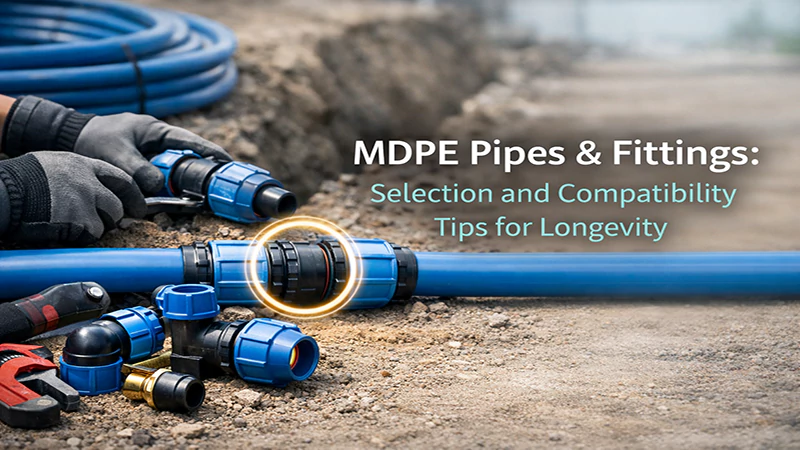
Ans: Yes, MDPE pipes require compression or electrofusion fittings to ensure leak-free and safe usage.
Q. Can MDPE pipes be recycled safely?
Ans: Yes, MDPE pipes are easily recyclable and they don’t release any harmful particles while being processed.
Q. Are MDPE pipes approved for drinking water use worldwide?
Ans: Yes, MDPE pipes are globally approved for drinking water by WRAS, NSF, BIS, and other standards.
Q. How to identify if MDPE pipes used in my home are food-grade?
Ans: Check markings on MDPE pipes for certifications like WRAS, NSF-61, BIS, or “food-grade” labels confirming potable water use.
Q. What maintenance is needed to keep MDPE pipes safe for drinking water?
Ans: Maintenance includes regular leak inspections, avoiding prolonged UV exposure, ensuring proper fittings, and periodic water quality checks for safety.