
Ans: If the installation is done right they can last upto 50 years.
MDPE Pipes: Properties, Benefits, Installation Guide, and Future Trends in Water Supply
Medium Density Polyethylene (MDPE) pipes have now become a global trend and are being used everywhere. With a density between 0.926 and 0.940 g/cm³, it creates a perfect balance between flexibility, strength, and resistance.
Its global market is also said to reach $7.3 billion by 2033, showcasing its rapid growth. Now you can easily find MDPE installation services for projects. But why should you get these? Is it only perfect on paper, or in reality, is it as good as it says it is?
Well, in this write-up, you’ll get to know everything about MDPE pipes. Let’s get started.

Key Properties of MDPE Pipes
MDPE pipes are engineered in a way that they balance both strength and flexibility. But here are its other key properties:
Material Composition and Grades
MDPE pipes are made from medium density polyethylene resins. If we talk about the most commonly used grades, those will be PE80 and PE100, which are chosen based on their pressure ratings and service conditions.
During manufacturing, stabilizers (for UV protection) and antioxidants are added to enhance outdoor performance.
Physical & Mechanical Properties
Flexibility: MDPE pipes can bend without breaking, making them easier to install on uneven ground.
Impact Resistance: MDPE pipes are known for their flexibility and not cracking. They are more shock-resistant in comparison to other rigid and brittle pipe types.
Chemical Resistance: MDPE resins are
resistant to most natural chemical compounds contained in soil and water. This prevents corrosion and scaling.
Standards and Certifications
MDPE pipes have to meet certain standards for potable water applications. Nationally, in India,
The IS 4984 Standard governs the polyethylene pipes used for water supply. Internationally, WRAS approval is a must in the UK, and BS EN 12201 ensures that the pipes are safe for drinking water applications.
Benefits of Using MDPE Pipes in Water Supply
Now, let’s talk about the benefits you’ll be getting after using MDPE pipes in the water supply. This includes:
Durability and longevity
MDPE pipes have a lifespan of up to 50 years, minimizing the need for replacement.
Corrosion resistance
Metal pipes rust easily, but MDPE pipes don’t and keep the water system clear of rust.
Leak-free performance
MDPE systems can be joined properly to minimize leakage and conserve water.
Lightweight & easy transport
Their weight is much lighter than steel or cement pipes, reducing logistics and handling costs.
Value for money
Though 20–30% costlier than PVC, MDPE lasts longer and has low maintenance, saving long-term costs.

Limitations and Challenges
Certain limitations and challenges come with MDPE pipes. While they are easy to overcome, it’s important to know them. Most common ones are:
Temperature sensitivity: MDPE can be unstable when transporting very hot water, causing it to soften.
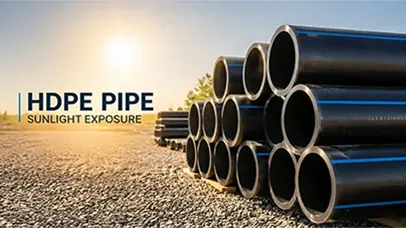
Sensitivity to UV rays: Pipes should not be left exposed to sunlight for extended periods, unless you select a UV-stabilized grade.
Caution during installation: Leaks or failures can occur due to improper jointing or trenching.
Applications of MDPE Pipes in Water Supply
MDPE pipes are reliable and flexible, making them important for today’s water distributions.
From the municipal water network, MDPE pipes ensure the provision of safe drinking water to residents and businesses.
MDPE pipes are said to be the most valuable in rural water projects as they are durable and flexible. Since such areas have limited water infrastructure, it provides reassurance for long-term use.
In agriculture, MDPE pipes are essential in moving water applied on agricultural fields, as in drip irrigation, as well as reducing wastewater by improving supply efficiencies, such as in sprinkling systems.
Installation and Best Practices
Below, you can see what are the best practices related to MDPE pipes and its installation. This includes:
Handling and Storage Guidelines
Additional precautions include storing the pipes away from direct sunlight and sharp items. Pipes should never be dragged across rough locations with sharp stones or debris to avoid scratching the surfaces of the pipes.
Trenching and Soil Preparation
The trench shall be prepared with a smooth bed of soft soil or sand to protect against external damage or piping materials. Sharp stones or any debris shall be avoided.
Jointing Methods
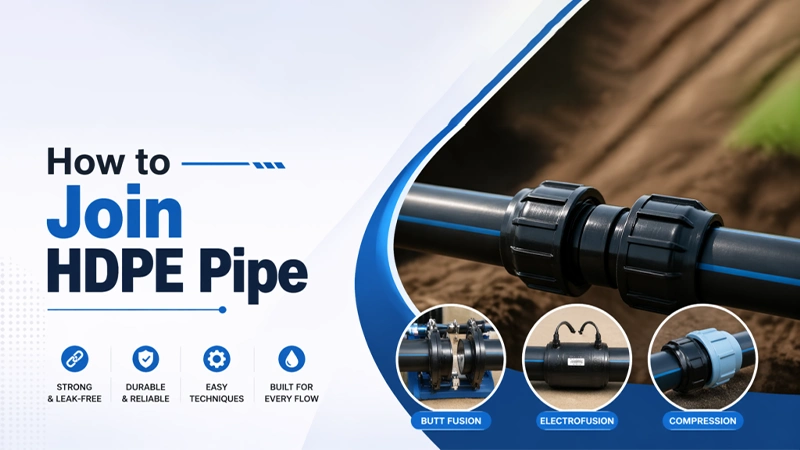
The top two jointing methods available are:
01
Compression fittings
A quick and easy option for smaller to medium-sized installations.
02
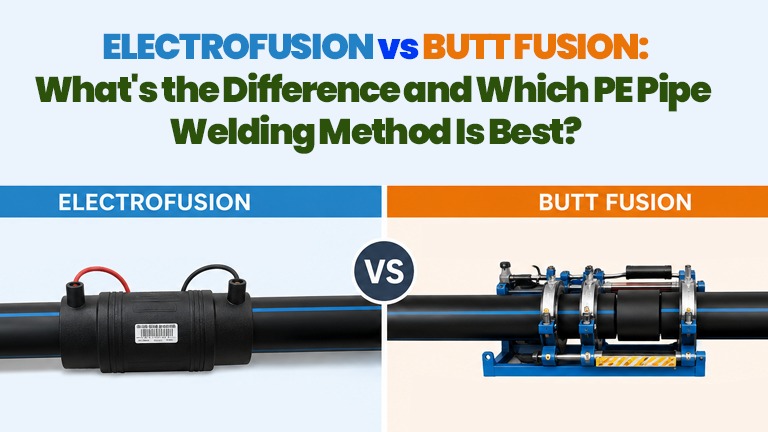
Fusion welding (either electrofusion or butt fusion)
Seamless Joints. More often, the method is used in joining large pipe systems, such as water distribution systems.
Jointing Methods
The top two jointing methods available are:
Compression fittings: A quick and easy option for smaller to medium-sized installations.
Fusion welding (either electrofusion or butt fusion): Seamless Joints. More often, the method is used in joining large pipe systems, such as water distribution systems.
Safety Precautions During Installation
Pressure testing shall always be conducted following an installed pipe joint to ensure the joint is secured. Furthermore, workers should follow all the guidelines in order to use the fusion machine while following all the other safety and equipment guidelines.
Cost and Economic Comparison
Now let’s talk about its cost and economic comparison. Compared to alternatives:
- Steel Pipes: They are more expensive to install and prone to corrosion.
- PVC Pipes: While they are cheap, they are also less durable and brittle when put under stress.
- Concrete Pipes: These are the most durable option, but because of its weight they become costly to transport and install.
Sustainability and Environmental Impact
Sustainability is increasingly being given greater attention during water infrastructure projects, and MDPE pipes play an important role in conformity with sustainability goals. They can be recycled easily so that the material is reused instead of being wasted.
Their leak-free systems help minimize water losses, to conserve precious water resources better, as MDPE pipes have a lower energy footprint based on their lighter weight, which uses less energy in the transportation and installation of pipes than heavier materials, steel or concrete.
Future Trends and Innovations in MDPE Pipes
In the future, we might see things like:
- Barrier pipes: Multi-layer MDPE with protective barriers to prevent contamination.
- Smart infrastructure: Integration of leak detection sensors in water pipelines.
- Improved resins: Development of new grades with higher strength and longer service life.
- Sustainable solutions: Research on reducing the carbon footprint of MDPE manufacturing.
Conclusion
MDPE pipes for water are probably the best pipes that you can get. They are flexible, durable, fit all kinds of budgets and are multipurpose. However, they should be installed by a specialist so that they can perform to their fullest potential.
It has changed the way water is transported and distributed in the best way possible. Let it be for drinking water supply, irrigation, or housing projects it fits everywhere. So, what are you waiting for?
FAQs
Q. What is the lifespan of MDPE pipes?
Q. Can MDPE pipes be used above ground?
Ans: Yes, MDPE pipes can be used above ground if they are up to UV stabilized grades.
Q. How do MDPE pipes compare to PVC for water supply?
Ans: MDPE is more flexible, durable, and leak-resistant than PVC, making it better for long-term water networks.