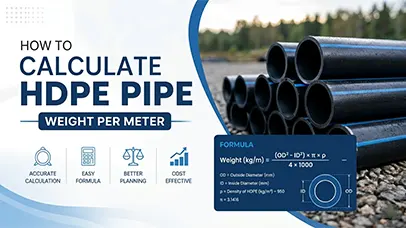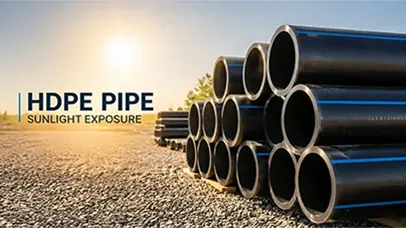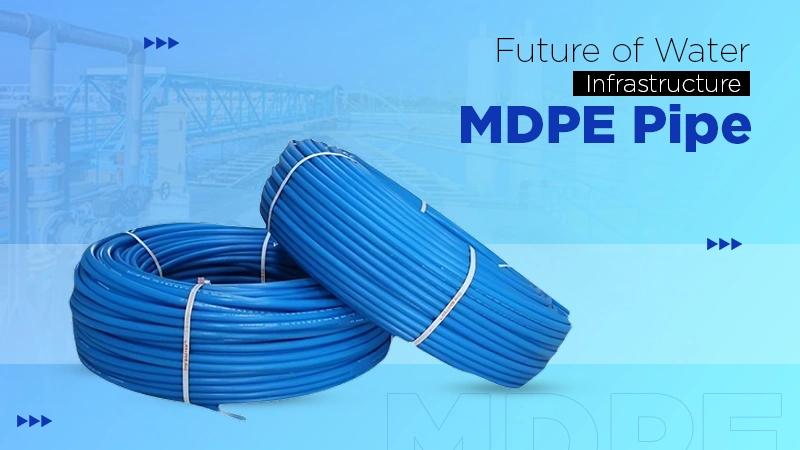

HDPE pipes are used for water supply, gas distribution, irrigation, sewage systems, and industrial applications.
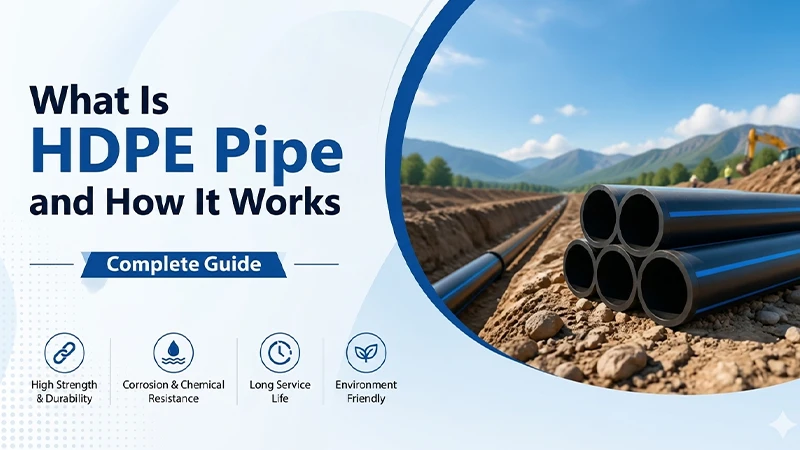
What Is HDPE Pipe and How It Works
High-Density Polyethylene (HDPE) Pipe has become a preferred option for water supply, gas distribution, drainage, and industrial systems because it is a strong, flexible, durable type of plastic piping.
HDPE is constructed from high-density polyethylene material, it’s very resistant to corrosion and chemicals as well as environmental stresses. Compared to traditional metal piping, HDPE is more durable and does not rust, corrode, or crack easily, which means that HDPE will be reliable over time.
HDPE Pipe is manufactured using an extrusion process and using heat fusion processes to create leak free systems. Because of its durability and efficiency, many modern infrastructure and construction projects around the world are designed using HDPE Pipe as the primary type of piping used.
Key Properties and Features of HDPE Pipes
HDPE pipes offer superior property combinations, allowing for superior overall performance in a variety of applications.
- Very durable: HDPE is highly resistant to impacts, abrasion and environmental stresses, thus allowing for performance over time.
- Corrosion-resistant: Unlike metal piping; HDPE will not corrode, develop rust or scale over time.
- Flexible: HDPE can bend without breaking, which makes it perfect for rough terrain or seismic prone areas.
- Light weight: HDPE is easier to transport and install than most traditional pipe materials.
- Chemically resistant: HDPE can transport many different types of chemicals without breaking down.
Seamless, leak-proof joints are created through heat fusion of HDPE at the joint, which minimizes chances for leakages. 50-100 years under normal operating conditions, high-density polyethylene pipes are expected to last between.Explore HDPE pipe solutions designed for durability and corrosion resistance.
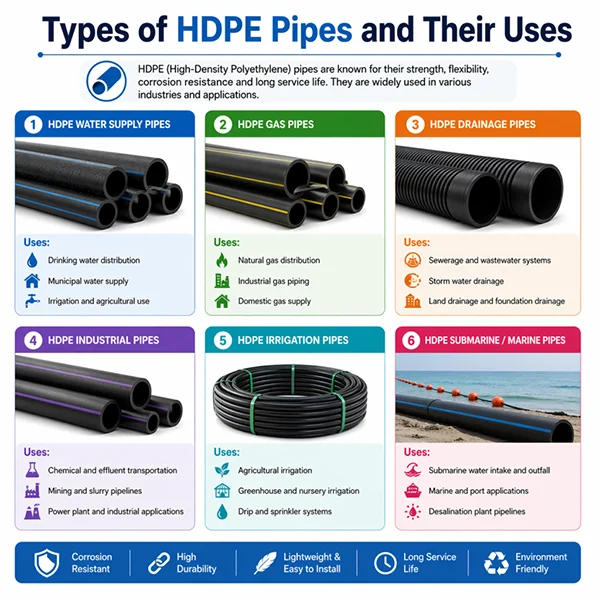
Types of HDPE Pipes and Their Uses
There are different types of HDPE pipes that are classified based on purpose and the types of applications they are used for.
Types of HDPE pipes by number designations are:
- PE63: Older grade of HDPE pipe that have very little modern use.
- PE80: HDPE pipe used for medium pressure applications such as domestic water supply.
- PE100: The highest density/most strong/durable HDPE pipe; best suited for high pressure applications.
Forms of HDPE pipes include:
- Coil HDPE pipes: Flexible, sold in long coils and used for irrigation systems.
- Straight HDPE pipes: Used for industrial & municipal projects that require rigid piping.
- Perforated HDPE pipes: Designed primarily for drainage & waste water applications.
- Corrugated HDPE pipes: Primarily used for subsurface storm drainage systems & underground sewerage systems.
Each type of pipe is designed with a specific purpose in mind with variabilities covering pressure ratings, degree of flexibility, and environmental conditions under which the pipe will be operating.
Advantages of Using HDPE Pipes
HDPE pipes provide several benefits compared to traditional pipe materials such as steel, PVC and concrete.
- Reduced installation and transportation costs because of its lightweight.
- Corrosion and scaling resistant material require less time spent repairing.
- Environmentally Friendly
- Material is 100% recyclable
- Reduced leakage allowing for water conservation
- Decrease environmental impact
- Less friction provides for efficient movement of fluids.
- Can be used in extreme temperatures and/or harsh environmental conditions.
- Can be installed utilizing trenchless methods.
These benefits make HDPE a very smart long-term infrastructure investment.Find out why HDPE pipes are a good choice, such as how they are good for the environment and cost less to install.
Applications of HDPE Pipes in Different Industries
In many industries, high-density polyethylene (HDPE) pipes are very versatile and therefore are widely employed.
- Municipal and distributed drinking water systems are examples of their use in both urban and rural areas.
- Agricultural irrigation systems use both drip and sprinkler approaches to distribute water.
- Natural gas is transmitted and distributed through HDPE pipes.
- Sewage or waste streams are collected and conveyed using HDPE pipes in sewage and wastewater collection systems.
- HDPE pipes are used to transport fluids that are industrial in nature, such as oils, lubricants, and other chemicals used in an industry.
- Abrasive materials are transported and handled using HDPE pipes.
- Duct services for electrical and telecom cables are also provided by HDPE pipes.
Because HDPE pipes are employed by so many different types of applications, they form an important part of the infrastructure of the modern world.
Learn about Water Management Solutions and how HDPE pipes can improve it
Conclusion
HDPE pipes are a new generation of durable, cost-effective piping material used in many different applications in different industries. Conventional materials are inferior to HDPE because of their ability to resist corrosion, chemicals, and stress due to the environment. HDPE pipes also have many advantages, including flexibility, leak-proof joints, and long life, thus providing both reliability and savings.
Applications for HDPE pipes include water service, agricultural use, industrial use, and gas service, all of which provide consistent performance, therefore, HDPE pipes are a reliable alternative to traditional piping materials due to their ability to perform consistently under extreme conditions.
FAQs
What is HDPE pipe used for?
How long do HDPE pipes last?
HDPE pipes can last between 50 to 100 years depending on usage and environmental conditions.
Are HDPE pipes better than PVC pipes?
HDPE pipes are more flexible, durable, and resistant to impact and chemicals compared to PVC pipes.
Can HDPE pipes handle high pressure?
Yes, especially PE100 grade HDPE pipes, which are designed for high-pressure applications.
Are HDPE pipes environmentally friendly?
Yes, HDPE pipes are recyclable, reduce leakage, and support sustainable infrastructure development.