
Butt fusion is the best method for joining HDPE pipes, providing strong, leak-proof joints suitable for high-pressure and long-term applications.
How to Join HDPE Pipe
HDPE piping is popular in many industrial applications because of its high resistance to corrosion and high flexibility. In addition to providing a long service life and resistance to leaks, the effectiveness of HDPE pipes depends largely on the manner in which they are connected together.
Properly joining these pipes will provide a strong connection, prevent leakage, and ensure overall system integrity in the presence of elevated pressures. Regardless of whether the pipe installation you are performing is large or small in scale, knowing how to properly connect HDPE pipes is critical to producing an effective and enduring result.
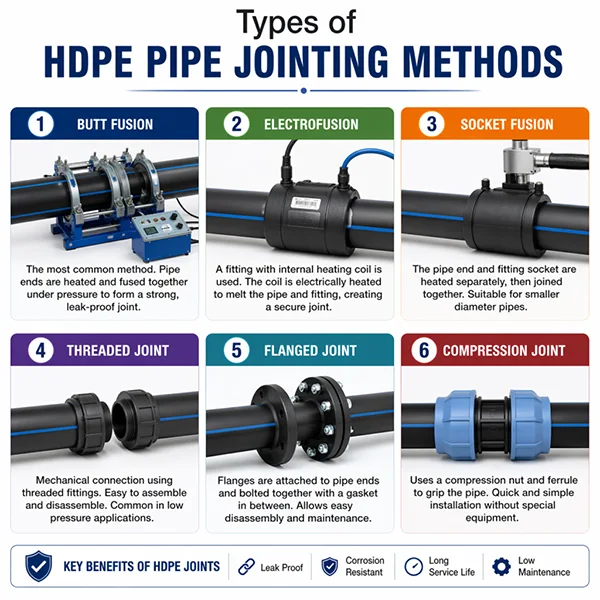
Types of HDPE Pipe Jointing Methods
There are various techniques to join HDPE pipes depending on the type of project and how they will be used, the method you choose matters because it’s essential that whatever joint you use maintains its integrity throughout its lifespan.
Butt Fusion Jointing
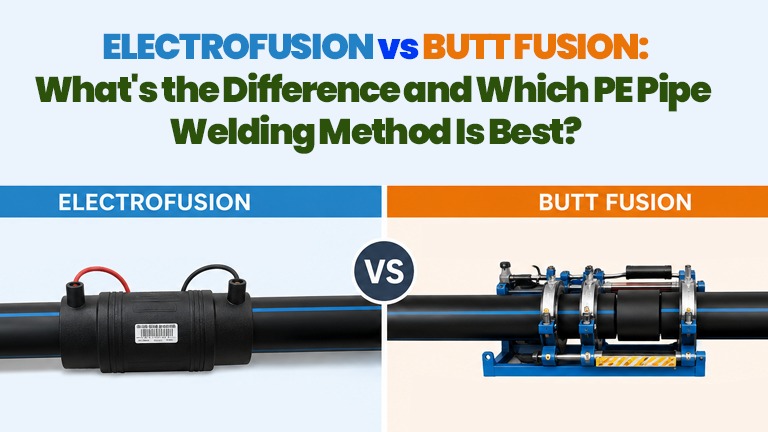
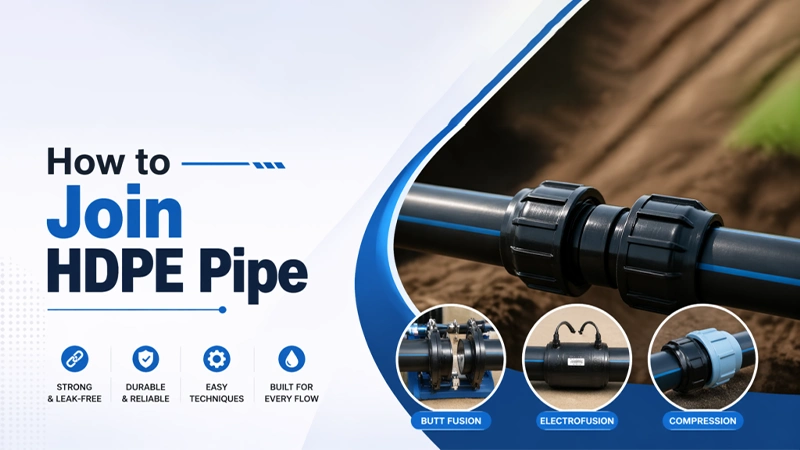
Butt fusion is probably the most common way of making connections between HDPE pipe of the same diameter and wall thickness. This process consists of heating each end of the pipes that will be fused together and applying pressure to fuse them together at their ends, developing a continuous joint.
Electrofusion Jointing
Electrofusion is a way to connect HDPE pipe using a special fitting with heating coils embedded in the fitting. When electric power is supplied to the coils, they melt and form a bond between the two pipes.
Socket Fusion Jointing
Socket fusion is primarily used with smaller diameter pipes; an example would be drain pipe. The process involves heating the outer surface of the pipe up to a predetermined temperature and the inner surface of the fitting. Once both the pipe and fitting are to temperature, the pipe is slid into the fitting.
Mechanical Jointing
Typically, mechanical fittings such as compression fittings and flanges connect pipes using mechanical fasteners. Mechanical joints are generally used for pipes that require temporary connections or for situations where disassembly requires.
Extrusion Welding
Extrusion welding typically repairs HDPE pipes, connects irregular-shaped (not designed to join with any of these methods) HDPE pipe. Extrusion welding is accomplished by applying molten material to the adjoining surfaces that are to be knitted together.
Each method has an application and will be used based on specific pipe size, the pressure requirement of the application, and type of installation.With reliable HDPE installation services in Delhi, you can learn about advanced joining methods like butt fusion and electrofusion that make connections that last.
Step-by-Step Process for Butt Fusion Jointing
One way to join polyethylene pipe is by using butt fusion. When it is executed properly, the resulting joint is as strong as the pipe itself.
- Preparing the Pipe Ends: Pipe ends must be dry, clean, and free of dust or contaminants before fusing. It is very important to have the pipe ends aligned properly so that the final joint will be uniform.
- Facing the Pipe Ends: A facing tool is used to trim the edges of the two pipe ends to create smooth, parallel surfaces. This will help ensure a good fit during the fusion process.
- Heating the Pipe Ends: Two pipe ends are heated together by placing them against a specified surface temperature plate. This will soften the polyethylene material to prepare it to join together.
- Joining the Pipes: Once sufficient heating has occurred, the two pipe ends are removed from the heating surface and pressed together under controlled pressure to form a bond.
- Cooling the Joint: The fused joint must be allowed to cool naturally without being disturbed. Proper cooling will develop maximum fusion strength and durability.
Butt fusion systems work great for large installations and provide a leak-free, permanent connection.
Electrofusion Jointing Technique Explained
Electrofusion can be very precise and efficient, especially in complex installations or repairs.
Electrofusion Fittings
In electrofusion, fittings with heating coils embedded are utilized. Each fitting is sized according to the corresponding pipe and to its specified dimensions.
Pipe Surface Preparation
Scraping the pipe surface to remove all oxidation will help in creating a good bond. The cleaning process is essential in creating a good joint.
Pipe Alignment & Insertion
The alignment of the two pipes inside the electrofusion fitting is accomplished by utilizing clamps while inserting the two pipes into the electrofusion fitting.
Application of Electric Current
The control unit sends the electrical current through the heating coil in the fittings. The heating coil melts the surface of the pipe and the fitting simultaneously.
Cooling and Solidification
After the fitting receives input from the control unit and is heated, it is left to cool down and solidify together and form a strong permanent joint.
Electrofusion is ideal in restricted areas and for repairs when butt fusion cannot be utilized.
Common Mistakes to Avoid When Joining HDPE Pipes
Even with the proper procedures, making mistakes with joining methods can result in weak connections, leaks, and/or failures in the system. It’s important to avoid the following common mistakes:
- Dirty Pipes: Dirt, moisture and/or grease on the surface of a pipe can prevent proper fusion and will weaken the joint.
- Wrong Temperature Setting: If the ends of the pipes are overheated or underheated, bonding can be poor or the pipe can deform.
- Incorrect Pipe Alignment: Pipes that do not align properly can create stress points on the joint, creating failure over time.
- Disturbing the Joint Before It Cool Down: Disturbing the joint before it has cooled down completely will compromise its strength.
- Damage Equipment: Using damaged fusion machines and tools will create inconsistent results and result in poor-quality joints.
- Ignoring the Manufacturer Guidelines: Each manufacturer and fitting have application requirements. Not following the requirements can reduce the effectiveness of the joint.
By considering these factors, you can guarantee that your HDPE pipe system will be strong and dependable.Find out the common mistakes to avoid when joining HDPE pipes.
Conclusion
Connecting high-density polyethylene (HDPE) pipe correctly is essential in developing strong and leak-tight pipelines. Methods like butt fusion and electrofusion can create dependable and enduring joints to resist both internal pressure and environmental forces.
However, their success will depend on following proper procedures during preparation and installation, and following the manufacturer’s specifications. By avoiding common installation errors and using the correct tools will significantly improve the quality of work performed for installations using these types of jointing systems.
FAQs
What is the best method to join HDPE pipes?
Can HDPE pipes be joined without fusion machines?
Yes, HDPE pipes can be joined using mechanical fittings, but these are less durable and mainly used for temporary or low-pressure systems.
How long does an HDPE pipe joint last?
A properly joined HDPE pipe can last over 50 years, maintaining strength, flexibility, and resistance to corrosion under normal operating conditions.
What temperature is required for HDPE pipe fusion?
HDPE pipe fusion typically requires temperatures between 200°C and 220°C, ensuring proper melting and bonding of pipe surfaces during the process.