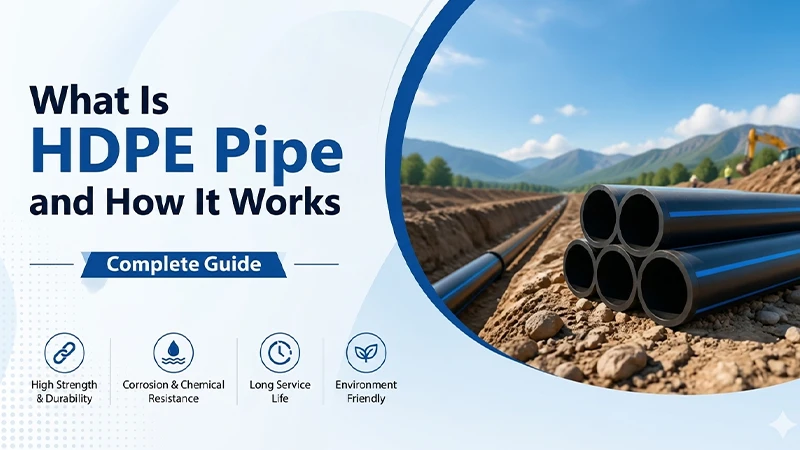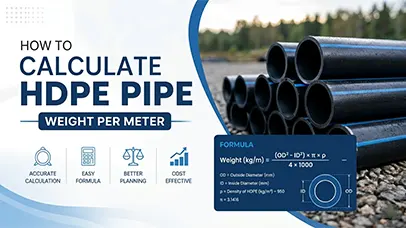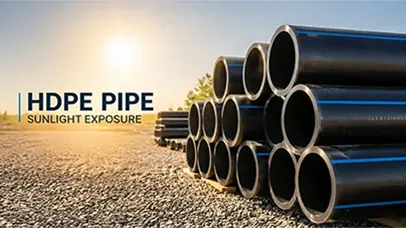

MDPE pipes resist corrosion, chemicals, and pressure changes, making them ideal for transporting raw and treated water in treatment facilities.
MDPE Pipes for Water Treatment Plants: Design and Application Insights
To transport untreated/developed/chemical liquids through raw waters to a water treatment facility, often require durable and effective pipeline systems. MDPE Pipe (Medium Density Polyethylene) systems have emerged as the favoured pipe material for modern water infrastructure projects.
As India’s water management sector continues to expand, MDPE pipe systems will increasingly be used in treatment plants for domestic and industrial treatment applications.
Appropriate engineering design and operational installation of MDPE pipe systems will ensure long-term performance, reliability, and operational efficiency of pipelines built with MDPE.
Role of MDPE Pipes in Water Treatment Plant Infrastructure
MDPE Pipes are a critical part of all modern-day water treatment facilities. They enable teams to transport water through each stage of production efficiently. They do so by utilizing a pipe that can accommodate both treated and untreated water while protecting the system from leaks or contamination.
Water treatment facilities are required to have pipelines that can endure a continual flow of water combined with variations of pressure and exposure to chemicals used to treat water.
MDPE pipes are designed to meet those demands since they cannot corrode, develop scale or chemically react.
There are several typical applications within water treatment facilities for MDPE pipes, including:
- Raw water intake pipelines, from various source types (river, lake, or reservoir) that are designed to convey water that has not been treated.
- Distribution pipelines convey treated water within the facility.
- Chemical dosing lines convey chemicals of treatment securely.
- Sludge management pipelines convey sludge during the waste treatment process.
- External water distribution connects the facility to the municipal water network.
Key Design Considerations for MDPE Pipeline Systems
Creating an MDPE pipeline for a water treatment facility needs planning to achieve efficiency, safety and long-term operation. When designing these pumps, the engineer has many technical design aspects to consider.
Designing an MDPE pipeline is generally initiated by determining the flow needs of the plant. The engineers will select a diameter, wall thickness, and pressure rating for the pipes accordingly to ensure they can sustain the anticipated flow volume and pressure.
Some of the primary design components are:
- Pipe diameter to provide appropriate flow rates and reduce pressure loss
- Pressure rating depending on how much work will be required during operation and what type of pump will be used
- Pipe routing and layout will prevent interference with different infrastructure.
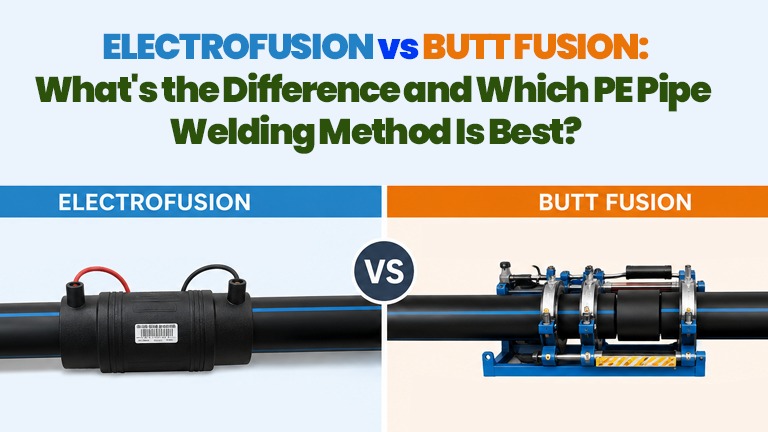
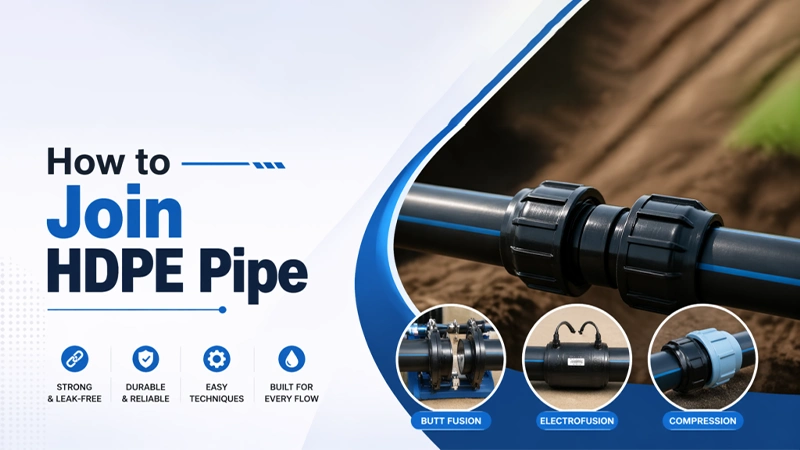
- How they will connect pipes together (e.g., electrofusion or butt fusion).
- How to handle thermal expansion in the piping system due to changes in temperature.
Advantages of Using MDPE Pipes in Water Treatment Applications
Pipes made from MDPE have proven to be very advantageous in the construction and operation of water treatment facilities. Compared with more traditional pipe materials (cast iron, steel, or concrete), MDPE has better durability against both corrosion and chemical eroding.
Water treatment facilities will routinely use chemicals (chlorine and coagulants) and disinfectants when processing drinking water. MDPE pipes will safely accommodate these chemicals, preventing any of these substances from damaging the pipe and migrating to contaminate the treated water.
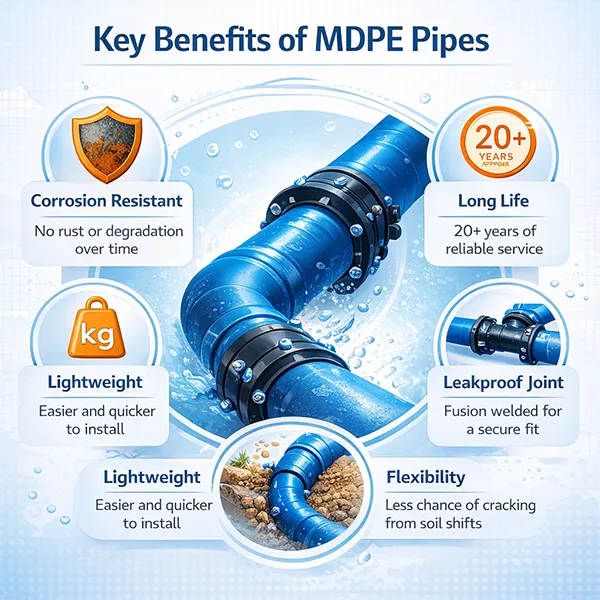
Key benefits of using MDPE pipes are:
- Resistance to corrosion (preventing rust and degradation of the material over time).
- Lighter weight (allowing for quicker and easier installation).
- Flexibility (allowing for less chance of cracking due to shifts in the soil surrounding the pipe).
- Fusion welded joints (creating a leakproof joint).
- Long service life (usually 20+ years).
These benefits contribute significantly to reducing the overall cost of maintaining the utility infrastructure in the long term. In addition, because MDPE pipes do not require the use of protective coatings or treatments, MA utility managers can expect that maintenance of the utility will be much easier than with traditional piping.
Installation and Maintenance Best Practices for MDPE Pipes
The installation of MDPE pipelines in water treatment facilities is critical to their overall long-term performance. Construction errors made during installation may cause the pipes to experience higher-than-expected degrees of wear and tear, which may result in leaks. Excessive stresses; or, ultimately, reduced efficiency of the entire system, even though the MDPE pipe itself will outlast the entire structure.
MDPE pipe system installers utilize a variety of installation procedures to maximize the performance of the entire pipeline system. These installation procedures incorporate the proper preparation of the trench prior to installing the pipe, line-up and seating of the pipe in the trench, and uniform welding of the joints.
Key best practices for installing MDPE pipes include:
- Establishing a trench design and depth that will protect from surface loads.
- Properly handling the pipe during transportation and installation to prevent damage.
- Using proper fusion welding techniques to establish leak-free joints.
- Performing adequate backfilling and compaction of the trench material to provide stability to the pipeline.
- Performing pressure testing prior to commissioning to ensure that the entire pipeline system is leak-free.
Conclusion
Due to their durability, flexibility, and resistance to corrosion, MDPE pipes have become a vital part of today’s water treatment plant infrastructures. They are well suited for the many different treatment processes because they can withstand a wide range of pressure and chemical exposure.
With proper engineering, planning, and installation of MDPE pipeline systems, water can be reliably transported with relatively little maintenance. In addition, they improve the efficiency and life cycle of the treatment plants while reducing operating expenses for engineers and facility managers.
As water treatment infrastructure in India continues to grow, MDPE piping represents an effective and efficiently managed method of distributing water. The versatility and durability of MDPE piping help to provide an efficient operation of treatment plants while ensuring that a safe and consistent supply of water is maintained.
FAQs
Why are MDPE pipes used in water treatment plants?
How long do MDPE pipes last in water treatment systems?
With proper installation and maintenance, MDPE pipes can last 40 to 50 years in water treatment plant infrastructure.
Are MDPE pipes safe for drinking water systems?
Yes, MDPE pipes are safe for potable water systems because they are non-toxic, corrosion-resistant, and prevent contamination during water transport.
What joining methods are used for MDPE pipelines?
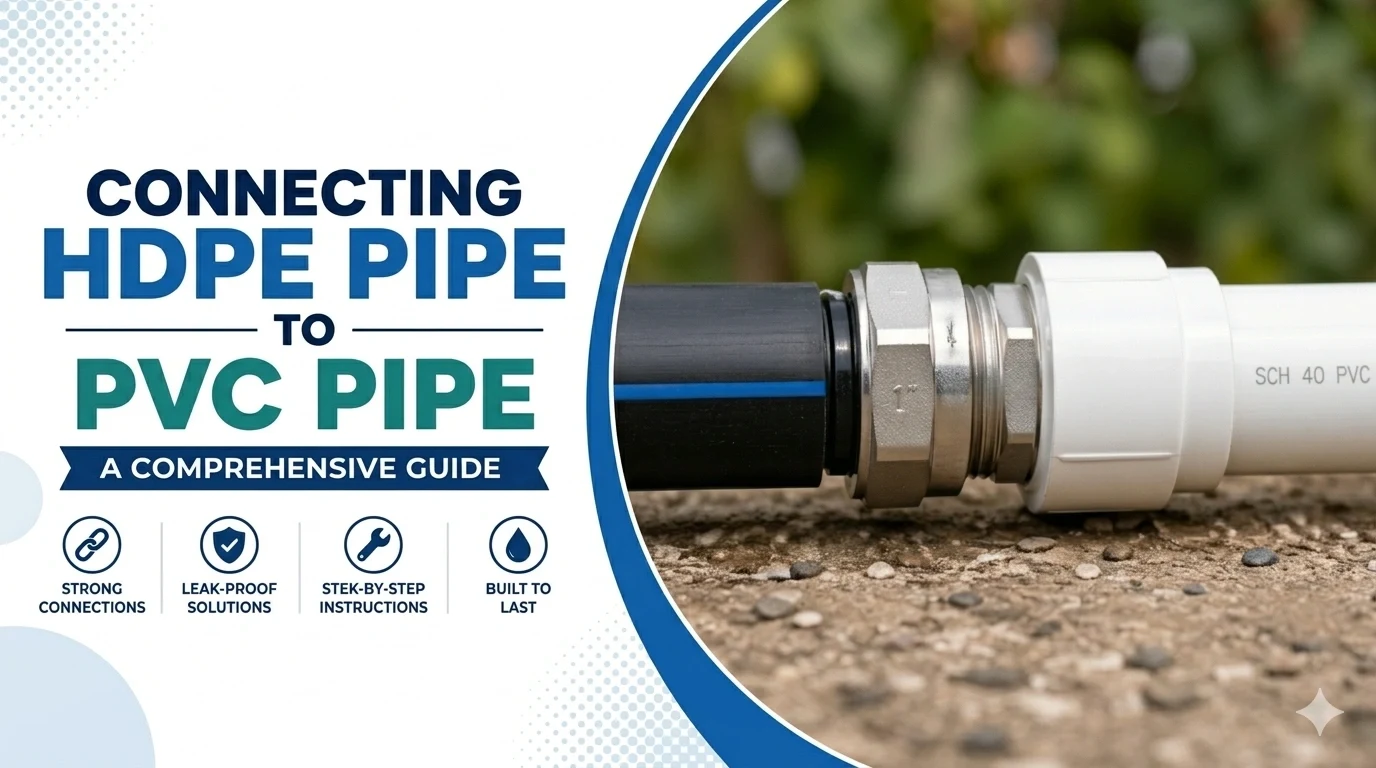
MDPE pipes are commonly joined using butt fusion, electrofusion welding, compression fittings, and mechanical couplings to create strong leak-proof connections.