Types of HDPE Pipe Fittings and Their Uses

High-Density Polyethylene AKA HDPE, is a specialized, strong, durable thermoplastic material. HDPE pipe is widely used in water supply, agriculture, and industrial applications because it provides the benefits of strength, flexibility, and corrosion resistance. HDPE pipe fittings serve as an alternative to metal and PVC pipes.
Connecting sections and changing directions are all required to build a pipeline system, as it is not the work of one pipe alone.
What Are HDPE Pipe Fittings?
HDPE pipe fittings help combine an entire pipeline together included connect pipes, change flow directions, manage different pipe sizes, and create additional outlets along with key benefit leak-resistant connections.
Commonly used types of HDPE Pipe Fittings
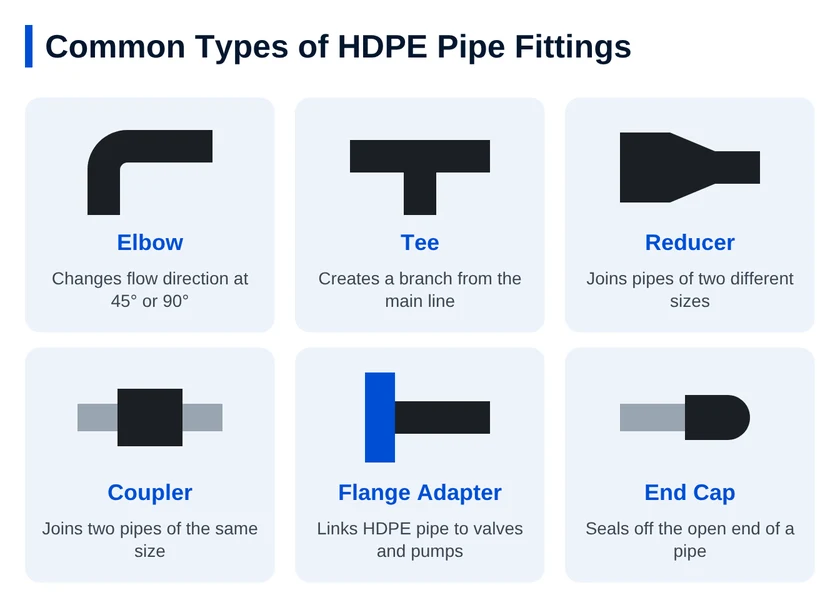
The most common fittings are:
1. HDPE Elbow Fittings
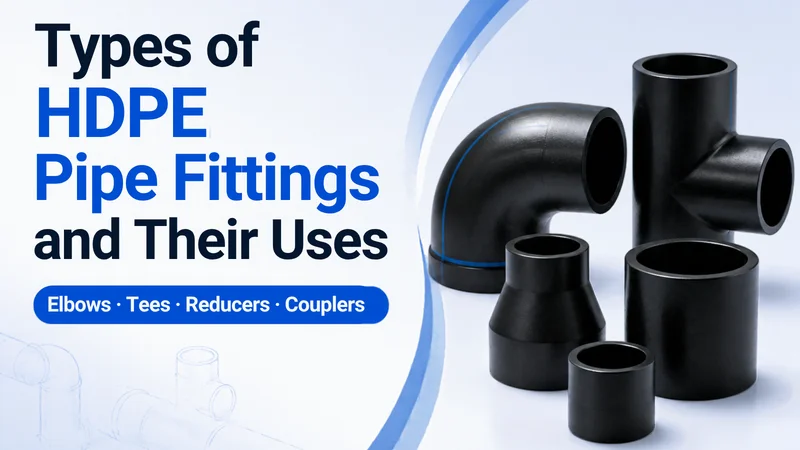
Do you need your pipeline to take a turn? Elbows are available to change the direction of the water flow at 45° or 90° angles.
Uses: water supply, irrigation and industrial pipelines.
2. HDPE Tee Fittings
Tee fittings create the branch connections which allow water to flow from one main pipe into two directions.
Uses: Water distribution and irrigation systems.
3. HDPE Reducers
Reducers connect pipes of different diameters to provide a smooth transition from one size to another.
Uses: Water supply and industrial pipelines.
4. HDPE Couplers
Couplers join two HDPE pipes of the same diameter to allow for pipeline extensions and repairs.
Uses: underground pipelines and pipe repairs.
5. HDPE Flange Adapters
These adapters link HDPE pipe to compatible valves, pumps and other pipework.
Uses: Industrial systems and water treatment plants.
6. HDPE End Caps
End caps seal off the open ends of pipes to prevent any uncontrolled flow or leakage of water.
Uses: pipeline closure, pressure testing and for future extensions.
Based on Material Grade
- PE 63: Older grade, lower strength.
- PE 80: moderate strength for medium pressure applications.
- PE 100: High strength for demanding, high pressure applications.
Based on Structure
- Single wall pipes: for water supply, irrigation and borewells.
- Double wall corrugated pipe for underground drainage and sewage.
HDPE Pipe Sizes and Pressure Classes
HDPE pipe is available in a range of diameters (typically from 20mm to 1200mm).
Common PN Ratings:
- PN 6 – Low pressure
- PN 8 – Moderate pressure
- PN 10 – Medium pressure
- PN 12.5 – Higher pressure
- PN 16 – Higher pressure
Remember: higher PN means greater pressure rating.
HDPE Pipe Fittings Installation Methods
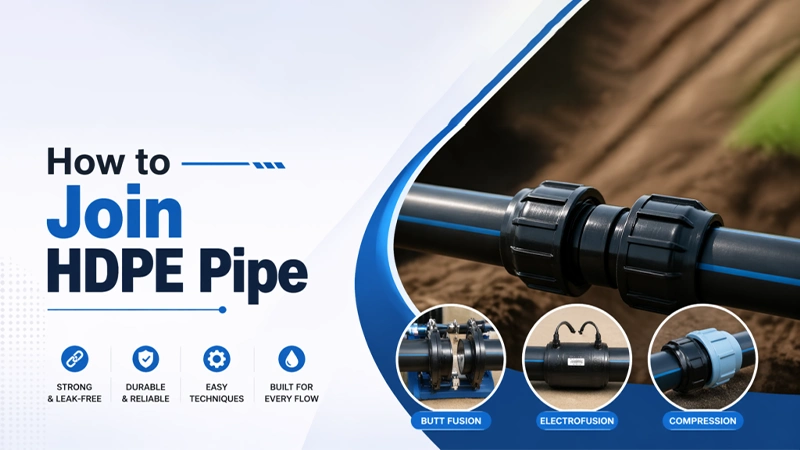
The right fit is important, but a bad joint will ruin the entire pipeline! When it comes to how to join HDPE pipe, three methods are commonly used:
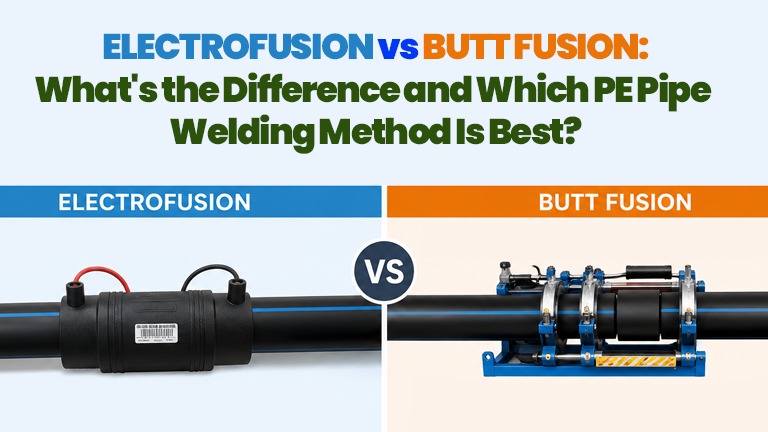
1. Butt Fusion
Both the pipe and the fitting ends are heated and then pressed together. Once they’ve cooled they form a very strong permanent joint indeed. No loose joints, no fiddly bits at all!
2. Electrofusion
These fittings have built in heating coils. An electric current passes through the fitting to heat it up and bond it securely to the pipe. A very good solution for a precise, leak free joint.
3. Compression Fittings
No heating or fusion machine required! These fittings use mechanical pressure to join the pipes and are ideal for smaller diameter pipes, low pressure applications etc.
Quick tip: it’s all down to pipe size, pressure rating, fitting design and site conditions. A good joint is the foundation of a good pipeline!
Applications of HDPE Pipe Fittings
HDPE pipe fittings are used in a number of applications due to their durability, chemical resistance and ability to be joined reliably.
Common applications include:
- Water Supply: Pipelines for the supply of water to residential, municipal and township areas.
- Agriculture: creating branch connections for irrigation systems.
- Industrial applications: supporting fluid transport and industrial piping networks.
- Gas Distribution: Connecting compatible HDPE gas pipeline systems using approved fittings.
- Drainage and Sewage: Joining pipelines for the wastewater and drainage systems.
One thing is absolutely clear: wherever you’ve got pipelines you need reliable connections, the right fittings are the key.
Final Thoughts
HDPE pipe fittings are tiny bits of kit, but they do a massive job. They’re there to join pipes, to change direction and to create branches.
Pick the right fitting, get the HDPE pipe installation done properly and your pipeline is far more likely to deliver good long term performance. After all the strongest pipe in the world is only as good as its connections!
FAQs
What are HDPE pipe fittings used for?
They connect the pipes, they change the direction of flow, they create branches and they control the flow of the pipeline.
What are the common types of HDPE pipe fittings?
Elbows, tees, reducers, couplers, flange adapters and end caps are all the lot.
Which joining method is best for HDPE pipes?
Butt fusion and electrofusion both create strong, permanent joints. Which you use will depend on the application and the pipe.
Can HDPE pipes be joined without heat?
Yes, compression fittings join up the pipes mechanically (no heat fusion) and are the ones you’ll find most commonly in the smaller diameter applications.
How do you prevent leaks in HDPE pipe joints?
Use the appropriate fittings, carry out the correct installation procedure and make sure that the alignment is correct and the joints are properly prepared.