Electrofusion vs Butt Fusion: What's the Difference and Which PE Pipe Welding Method Is Best?

Introduction
Polyethylene (PE) pipes have become the preferred solution for modern water supply, gas distribution, wastewater systems, mining, and industrial applications. Their flexibility, corrosion resistance, and long service life make them a practical alternative to traditional metal piping.
However, the performance of a PE pipeline depends not only on the quality of the pipe but also on the strength of its joints. The two most widely used joining methods are electrofusion and butt fusion. Although both create permanent, leak-free connections, they are designed for different installation conditions and project requirements.
Understanding the differences between these methods helps engineers, contractors, and project owners choose the most suitable solution for efficiency, reliability, and cost.
What Is Butt Fusion?
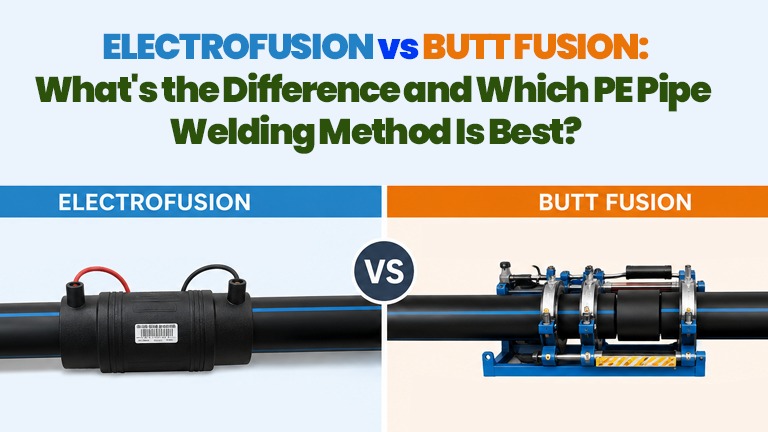
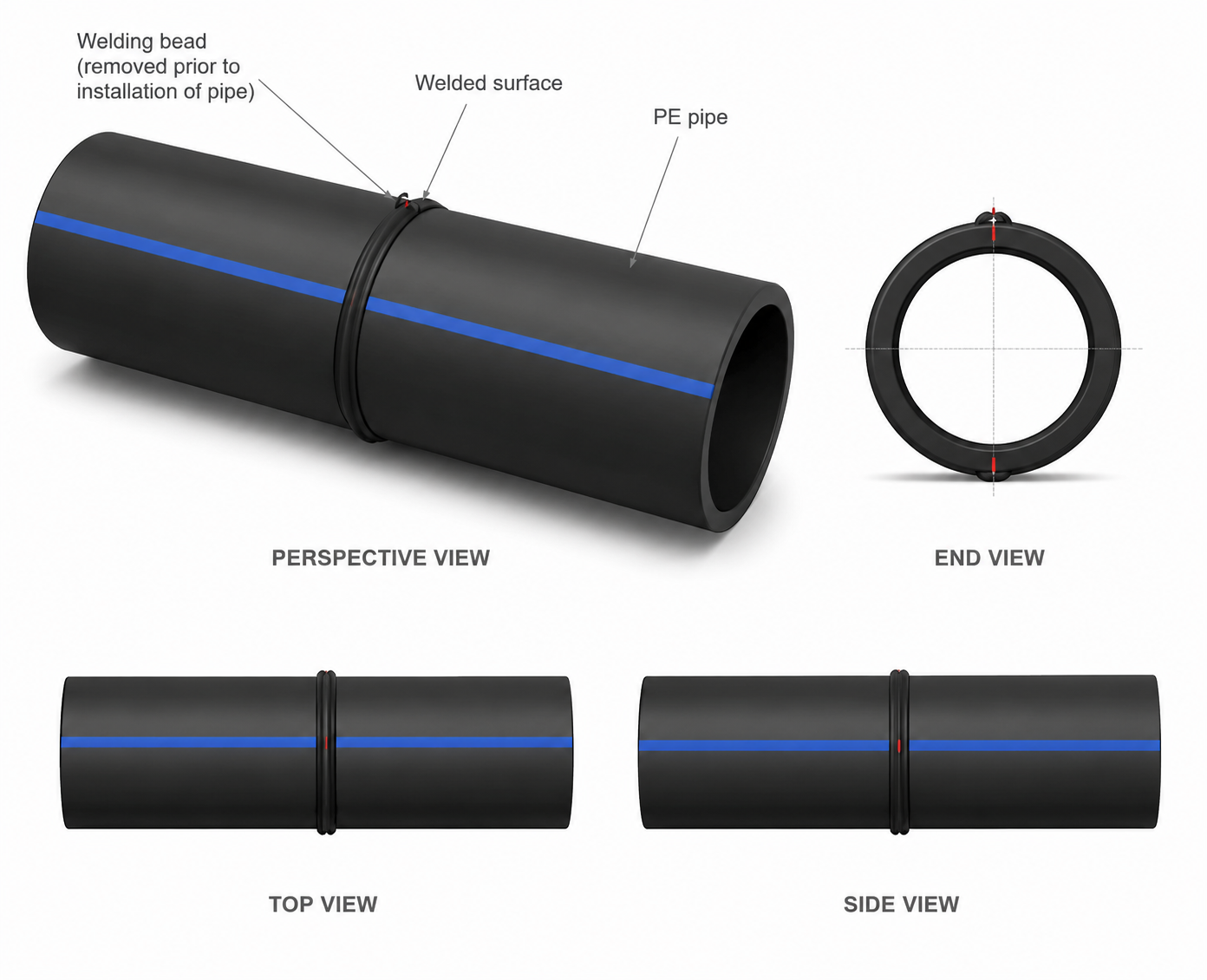
Butt fusion is a heat welding process that joins two PE pipes without using additional fittings. The ends of the pipes are carefully aligned, heated with a specialized heating plate until they become molten, and then pressed together under controlled pressure. As the material cools, the two pipe sections become one continuous piece.
Since the joint is made entirely from the original pipe material, it provides exceptional strength and maintains a smooth internal surface that allows unrestricted flow.
Advantages of Butt Fusion
- Produces strong, permanent joints
- No couplings or additional fittings required
- Smooth internal bore reduces pressure loss
- Ideal for long pipeline installations
- Suitable for trenchless construction methods such as horizontal directional drilling and slip lining
- Lower fitting costs on large projects
Limitations
- Requires dedicated butt fusion equipment
- Needs adequate workspace around the pipe
- Installation requires trained operators
- Less practical for repairs or confined excavations
What Is Electrofusion?
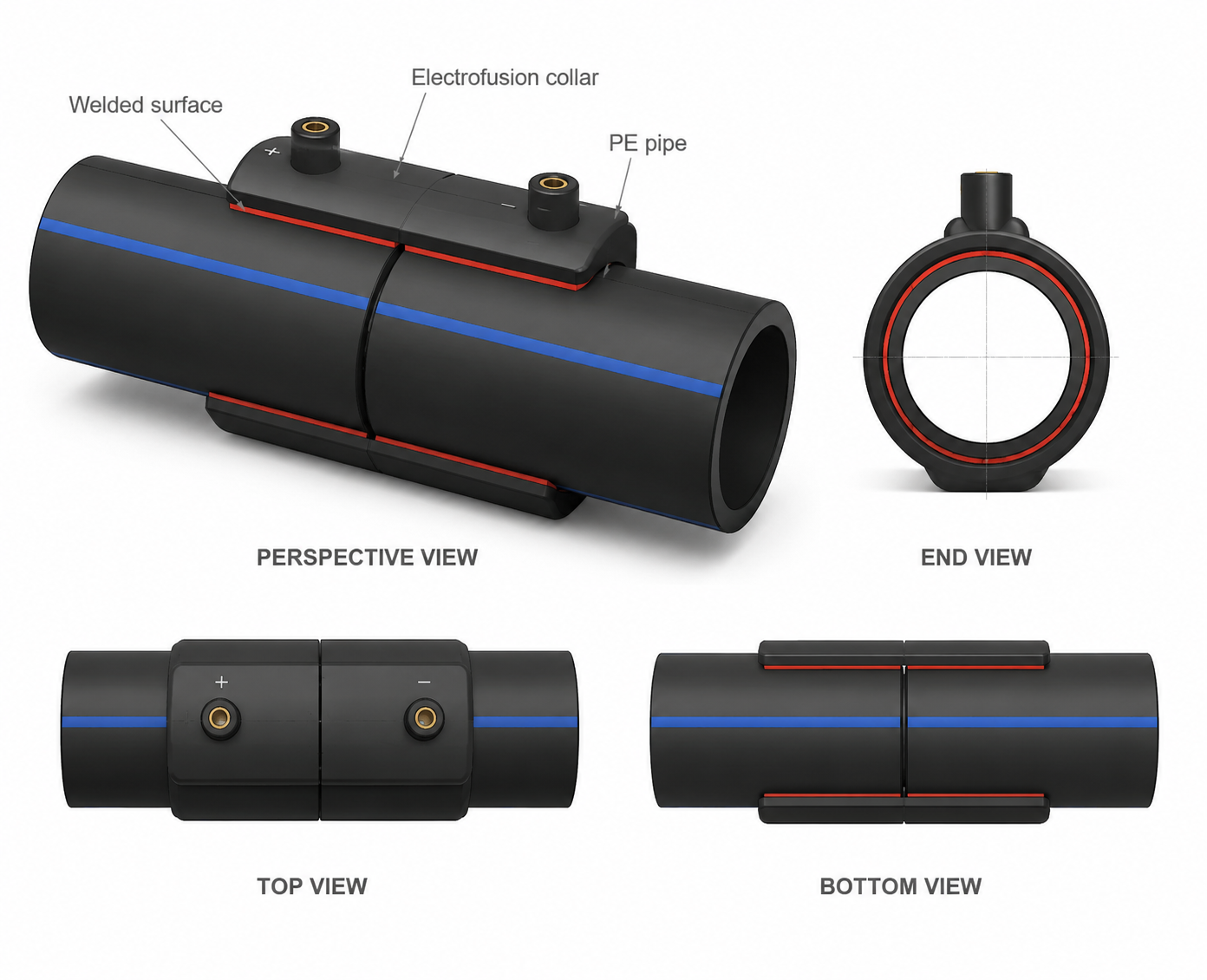
Electrofusion uses a specially designed coupling with built-in electrical heating coils. The prepared pipe ends are inserted into the fitting, and a fusion control unit supplies electricity to the embedded coils. The heat melts both the inside of the fitting and the outside of the pipe, creating a strong molecular bond as the material cools.
Unlike butt fusion, the coupling remains permanently attached to the pipeline.
Advantages of Electrofusion
- Excellent for confined spaces
- Ideal for repair work and pipeline modifications
- Minimal equipment required
- Easier to install where access is limited
- Suitable for connecting existing pipelines
Limitations
Not ideal for pulling or pushing pipelines during trenchless installation because the couplings remain on the pipe
Higher fitting costs than butt fusion
Surface preparation is critical
More sensitive to contamination during installation
Key Differences Between Electrofusion and Butt Fusion
| Feature | Butt Fusion | Electrofusion |
|---|---|---|
| Joining Method | Heated pipe ends fused together | Pipes joined using an electrofusion coupling |
| Additional Fittings | No | Yes |
| Installation Space | Requires more space | Works well in confined areas |
| Equipment | Butt fusion machine | Electrofusion control unit |
| Best For | New pipeline construction | Repairs, tie-ins, restricted access |
| Trenchless Installation | Excellent | Generally not recommended |
| Material Cost | Lower | Higher |
Which Method Creates a Stronger Joint?
When installed according to manufacturer guidelines, both welding methods create joints that are as strong as—or even stronger than—the pipe itself.
The real difference is not joint strength but installation quality. Poor preparation, incorrect heating parameters, or contamination can reduce weld quality regardless of the fusion method used.
Proper training and strict quality control are essential for achieving reliable, long-lasting connections.
Common Applications
Butt Fusion Applications
Butt fusion is commonly used for:
- Municipal water supply pipelines
- Gas transmission networks
- Irrigation systems
- Mining pipelines
- Industrial process piping
- Long-distance pipeline installations
Electrofusion Applications
Electrofusion is frequently selected for:
- Pipeline repairs
- Water network maintenance
- Gas service connections
- Urban utility projects
- Restricted excavation sites
- Pipeline extensions
Factors to Consider Before Choosing a Welding Method
Selecting the right fusion technique depends on several project conditions.
Available Workspace
If there is enough room for fusion equipment and pipe handling, butt fusion is often the most economical option. In tight excavations or crowded utility corridors, electrofusion offers greater flexibility.
Project Size
Large infrastructure projects usually benefit from butt fusion because it reduces the number of fittings and lowers material costs.
Smaller installations and repair work are generally better suited to electrofusion.
Installation Environment
Steep slopes, narrow trenches, underground chambers, and existing utility networks often limit equipment access. In these situations, electrofusion can significantly simplify installation.
Budget
Although electrofusion fittings are more expensive, they can reduce labor, excavation, and equipment costs on difficult sites.
Best Practices for Reliable PE Pipe Welding
Regardless of the joining method, following proper installation procedures is essential.
Always:
- Clean pipe surfaces thoroughly
- Remove the oxidized surface layer before welding
- Ensure correct pipe alignment
- Use calibrated welding equipment
- Follow manufacturer-recommended heating and cooling times
- Protect joints from contamination during installation
- Allow sufficient cooling before applying pressure
Consistent quality control helps prevent leaks and extends pipeline service life.
Which Method Is Better?
There is no universal winner.
Choose Butt Fusion if you need:
- Long continuous pipeline sections
- Maximum installation efficiency
- Lower fitting costs
- Trenchless installation capability
Choose Electrofusion if you need:
- Repairs or maintenance work
- Limited working space
- Easy installation in confined areas
- Connections to existing pipelines
The most suitable choice depends on the project’s technical requirements, site conditions, and installation constraints.