How to Connect HDPE Pipe to GI or Steel Pipe

Features of HDPE and Steel Pipes
Understanding both materials makes it a lot easier to pick the right connection.
- HDPE pipes are lightweight, flexible, and corrosion-resistant and are therefore well suited to water supply, drainage, and gas pipelines.
- GI and steel pipes are strong, rigid, and pressure-rated. They’re appropriate for industrial use (though will of course require some form of anti-corrosion protection).
In short: HDPE is flexible, steel is strong. A useful combination when they’re properly joined!
Methods to Connect HDPE Pipes to GI or Steel Pipes
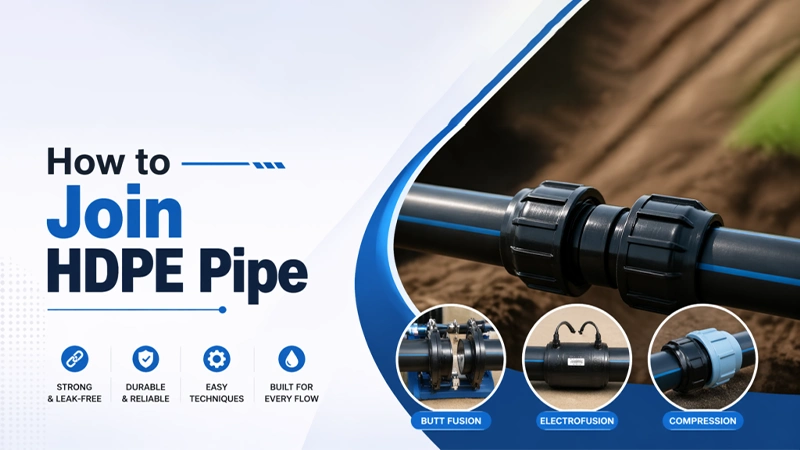
The method of connection will depend on pipe diameter, operating pressure, installation conditions, and maintenance requirements. There are four methods that are commonly used.
1. Flange Connections
Flange adapters are fused to the HDPE pipe and then bolted onto the appropriate GI or steel flange. A suitable gasket is used to seal the joint and prevent any leakage.
Best for: Large pipework, pumps, valves and the like where easy maintenance is required.
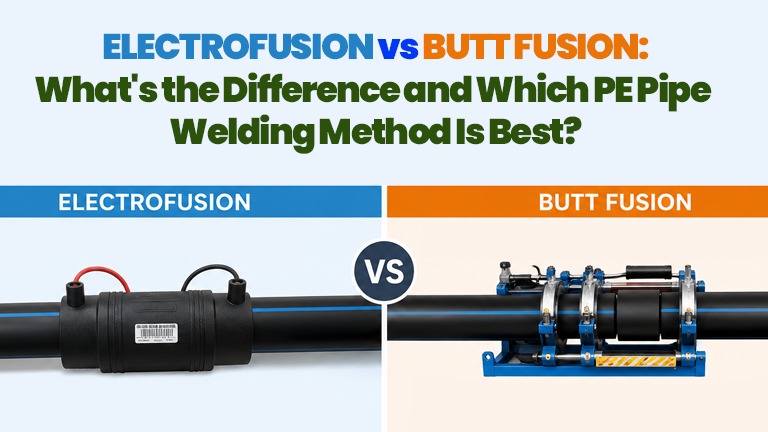
2. Electrofusion Fittings
These fittings incorporate built-in heating elements to fuse the surfaces of compatible HDPE pipe. They produce a very strong, leak tight joint but are of course not capable of joining HDPE to steel or GI. A suitable transition fitting is required in that situation.
Best for: HDPE to HDPE connections, particularly in the case of tight spaces where a butt fusion would be difficult to achieve.
3. Compression Fittings
Compression fittings use the mechanical pressure of the fitting to grip and seal the HDPE pipe. The other end of the fitting may be threaded or flanged for connection to GI or steel pipe. Some of the designs do require an internal stiffener to prevent the pipe from deforming.
Best for: Smaller pipelines, repairs and installs where fusion gear isn’t really viable.
4. Butt Fusion with a Transition Fitting
Butt fusion heats and fuses together the ends of compatible HDPE pipe and fittings to create a permanent joint. For joining to metal, a special transition fitting is used (an HDPE end for fusion and a metal end for joining to GI or steel).
Best for: permanent installations where you need a good HDPE side joint.
Materials Required for Connecting HDPE to Steel Pipe
Gather all the necessary materials and tools before you start. Having everything to hand makes the installation go far more smoothly and helps to avoid all sorts of delays
- HDPE fittings: flange adapters, stub ends, or equivalent transition fittings.
- GI or steel pipes: select the correct diameter and length.
- Matching flanges for joining the HDPE and the metal pipe sections.
- Sealing materials: compatible rubber gaskets or approved sealants.
- Fusion equipment: for joining the HDPE pipe to the flange adapter.
- Welding equipment: where a flange is to be attached to the steel pipe.
- Basic tools: pipe cutters, measuring tools, bolts and wrenches.
How to Connect HDPE Pipe to Steel Pipe: Step-by-Step Guide
A flanged connection is a viable option for joining HDPE and steel pipe. Here’s how you make a good, leak-tight joint.
Step 1: Prepare the Pipes
Measure and cut both pipes in accordance with the pipeline design. Keep the ends square, clean and free from dust, oil and damage. Good preparation will go a long way to producing a better connection.
Step 2: Install the HDPE Flange
Use an approved fusion machine to join the HDPE pipe to the flange adapter.. Adhere to the manufacturer’s instructions for heating temperature, pressure and time. Allow the joint to cool right through before attempting to handle it.
Step 3: Prepare the Steel Pipe
Attach the matching flange to the steel pipe using an appropriate welding procedure. The procedure should be one that is suitable for the pipe material and application. Inspect the weld for any visible cracks or defects.
Step 4: Align the Flanges
Bring the two flanges together and check that their faces are parallel and properly aligned. Bad alignment can result in undue stress and an increased likelihood of leakage.
Step 5: Install the Gasket and Tighten Bolts
Put a suitable gasket between the flange faces. Fit the bolts and tighten them gradually in a criss-cross pattern, to the recommended torque. This will ensure an even seal.
Step 6: Test the Connection
Carry out the required pressure or leak test in accordance with the pipeline design and relevant standards. Check for any leakage or unusual movement prior to putting the system into service.

Important Precautions for a Reliable Connection
A good fit requires proper fitting and regular maintenance if it’s to perform well. Keep these points in mind:
- Check the pressure ratings (make sure the pipes and the fittings are rated to handle the operating pressure).
- Allow for thermal expansion (leave room for the HDPE to expand and contract) to prevent stress at the joint.
- Check chemical compatibility and use appropriate materials for the fluid being transported.
- Follow the safety procedures: PPE during fusion, welding and testing.
- Hire skilled technicians – proper installation will go a long way to prevent leakage and joint failure.
- Inspect regularly for leaks, loose bolts, damaged gaskets and steel corrosion.
Common Problems and Their Solutions
Even a well thought through connection can go wrong if the installation or the maintenance is ignored. Here’s what to watch for:
- Water leakage: check flange alignment, gasket condition, bolt tightness and joint quality and replace any damaged components.
- HDPE pipe deformation: Check pressure and temperature limits. An internal stiffener will be required in accordance with the fitting design.
- Steel pipe corrosion: apply an appropriate anti-corrosion coating and carry out regular inspection of the pipe.
- Joint misalignment: realign the pipes and give them proper support to reduce the stress.
Conclusion
Connecting HDPE pipe to GI or steel pipe doesn’t have to be all that complicated. You just need to pick the right transition fitting and the right HDPE pipe solution for your particular pipeline.. Flanges are useful for maintainable joints, compression fittings are appropriate for certain smaller applications and fusion will give you a good joint between two compatible HDPE components.
Pay attention to the preparation, alignment, sealing and testing for a reliable pipeline. After all the best pipes in the world are only as good as the connections.