Rainwater Harvesting System: Turn Every Rainfall Into a Water-Saving Opportunity!

Rain pouring down? Don’t just get yourself an umbrella and watch the rain go down the drain! A rainwater harvesting system collects, filters and stores the rainwater for later use.
From rooftop rainwater harvesting through to groundwater recharge, rainwater harvesting is a smart water management method for conserving water, reducing your reliance on municipal supplies and dealing with water shortages. It’s as simple as saving the rain today to use the water tomorrow!
What Is Rainwater Harvesting?
Rainwater harvesting is the process of collecting, filtering and storing rainwater from roofs and other surfaces. Rather than letting the rainwater run off into the drains, you have a rainwater collection system that channels it into storage tanks or into groundwater recharge.
The collected water can be used for gardening, cleaning, flushing the loo, irrigation and so on. With appropriate treatment, it could also be made potable.
How Does a Rainwater Harvesting System Work?
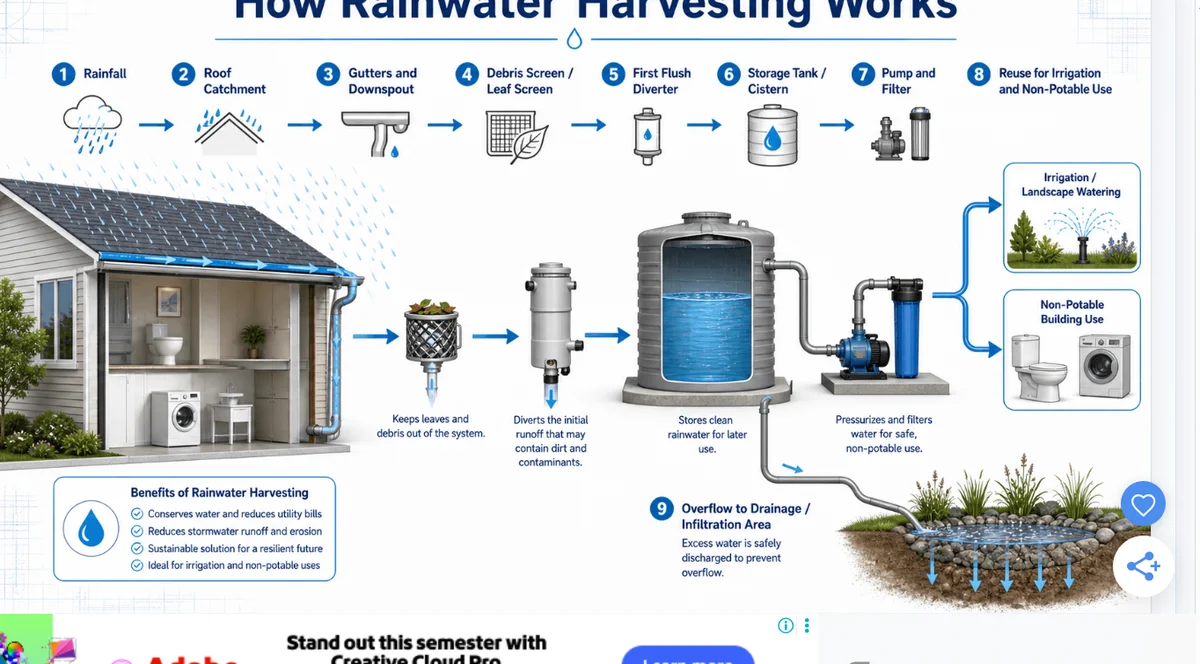
A rainwater harvesting system is all about the simple process of collecting rainwater and reusing it.
- Catchment: Rooftops or other appropriate surfaces to collect the rain.
- Transportation: gutters and downpipes carry the water to the collection point.
- Filtration: screens and filters to remove the leaves, dust and other debris.
- First Flush: the initial dirty run-off is diverted to prevent any contaminants getting into the system.
- Storage or recharge: filtered water is stored in tanks or directed into the ground to recharge groundwater.
- Reuse: stored water is put to suitable household, gardening or irrigation uses.
Types of Rainwater Harvesting:
Some of the more popular ways of rainwater harvesting for homes, commercial buildings and for communities.
1. Rooftop Rainwater Harvesting
Rooftop rainwater harvesting involves collecting rainwater which falls on the roof, channelling it via gutters and downpipes into storage tanks or recharge structures.
- Storage-based: collect the filtered rainwater in overhead or underground tanks for later use.
- Recharge-based: filtered water is directed into recharge pits or wells to recharge the groundwater.
It’s one of the most viable options for houses and flats.
2. Recharge Pits and Trenches
Recharge pits and trenches allow filtered rainwater to percolate into the ground and replenish the groundwater. They will generally have a layer of sand, gravel and stone to filter the water as it enters.
These systems are of particular use in urban areas where there’s all sorts of concrete and you can’t get any groundwater in any way.
3. Recharge Wells and Borewells
Recharge wells and borewells take the filtered rainwater and pump it down into the ground to recharge the aquifer. They’re useful in areas where the water table is quite deep and are often used in housing societies, institutions and industrial establishments.
Professional assessment and installation are key to preventing groundwater contamination.
4. Check Dams and Percolation Tanks
Check dams are used to slow the flow of rainwater in seasonal streams, allowing it to percolate into the ground. Percolation tanks are used to temporarily store the rainwater in order to encourage recharge of the groundwater.
These are the methods that are of most use in the village, in the farming areas and at the community level.
Essential Components of a Rainwater Collection System
A properly designed rainwater collection system requires far more than just a storage tank. Every element of the system has a role to play in the collection, filtration and water management.
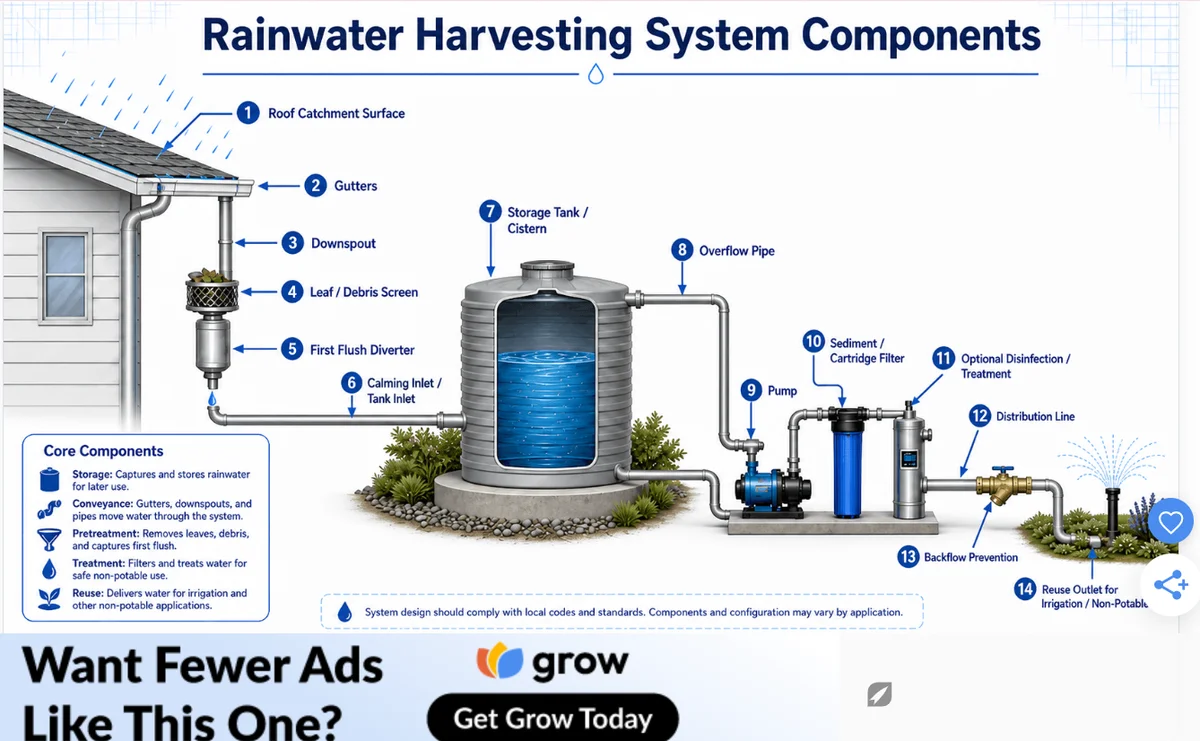
| Component | What Does It Do? |
|---|---|
| Catchment Area | Collects rainfall from rooftops or surfaces. |
| Gutters and Downpipes | Transport rainwater to the collection point. |
| Leaf Screens | Remove leaves and large debris. |
| First-Flush Diverter | Diverts the initial dirty rainwater. |
| Filters | Remove dust, sediment, and other impurities. |
| Storage Tank | Stores collected rainwater for future use. |
| Recharge Pit | Allows water to seep underground. |
| Pump and Pipes | Distribute stored water where required. |
| Overflow Pipe | Safely directs excess water away when the tank is full. |
Think of these as a team really: one component collects, one filters and one stores. Teamwork again, just make it water conservation!
Benefits of Rainwater Harvesting
Several environmental and practical benefits – Small Drops, Big Wins!
- Saves water: provides an additional source of water for all your non-drinking purposes.
- Recharges groundwater: helps to replenish the groundwater reserves.
- Reduces water bills by reducing reliance on municipal water for appropriate uses.
- Controls Runoff: helps to reduce the volume of rainwater that runs into the storm drains.
- Supports sustainability: promotes responsible water use and conservation.
- Useful during shortages: stored rainwater can provide a backup supply during dry periods.
Filtration for Rainwater Harvesting
Rainwater may appear clean but as it runs across the roof it will collect dust, leaves, bird droppings and all sorts of other things. That’s why filtration is a necessity for Harvesting rain water.
Here are some commonly used filtration options:
1. Mesh Filters
Mesh filters trap the leaves, twigs and larger debris prior to the rainwater entering the storage system.
2. Sand and Gravel Filters
These filters use layers of sand and gravel to remove the suspended particles and sediment from the rainwater that’s been collected.
3. Activated Carbon Filters
Activated carbon filters will help to reduce odours (unpleasant), colours, and some of the organic contaminants.
4. FRP Filters
FRP (Fibre Reinforced Polymer) filters are a durable and corrosion-resistant option and are used in the rainwater harvesting system.
Remember that filtration requirements are going to be entirely dependent on the intended use. If you’re thinking of using rainwater for drinking you’re going to need appropriate treatment, disinfection and regular water quality testing. A basic filter by itself is not sufficient.
How to Install a Rainwater Harvesting System at Home – DIY or Call the Experts?
Setting up a rainwater harvesting system needn’t be all that complicated. Follow these basic steps:
- Check your rooftop: measure the catchment area to work out how much rainwater you can collect.
- Choose your system: do you need a storage tank, a groundwater recharge pit or both?
- Install the gutters and pipes. Join up the roof collection points to the system.
- Add First-Flush and Filters: remove the initial dirty runoff and filter the water as it comes in.
- Connect storage or recharge: direct the filtered water into a suitable tank or recharge structure.
- Plan Overflow: make sure any excess water flows safely and doesn’t damage the building foundations.
- Test the system: check the connections, the filters and the water flow prior to regular use.
A properly planned installation will result in better collection, fewer blockages and more efficient water management.
How to Calculate Rainwater Collection? Let’s Do Some Water Maths!
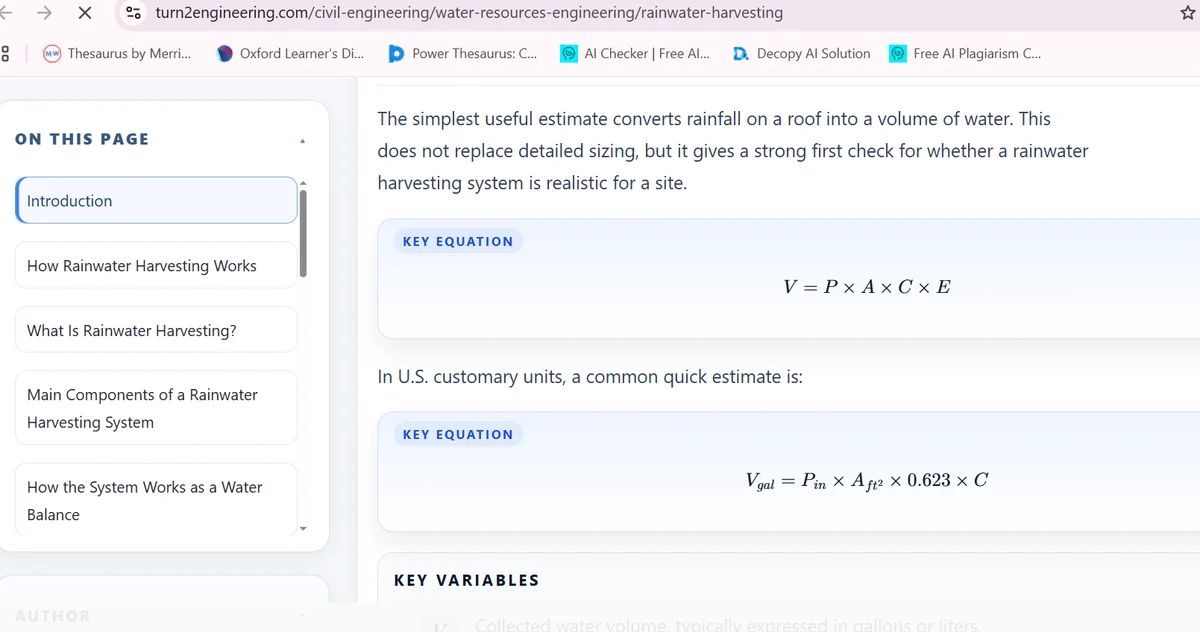
The calculation is based on rainfall, roof area, and collection efficiency.
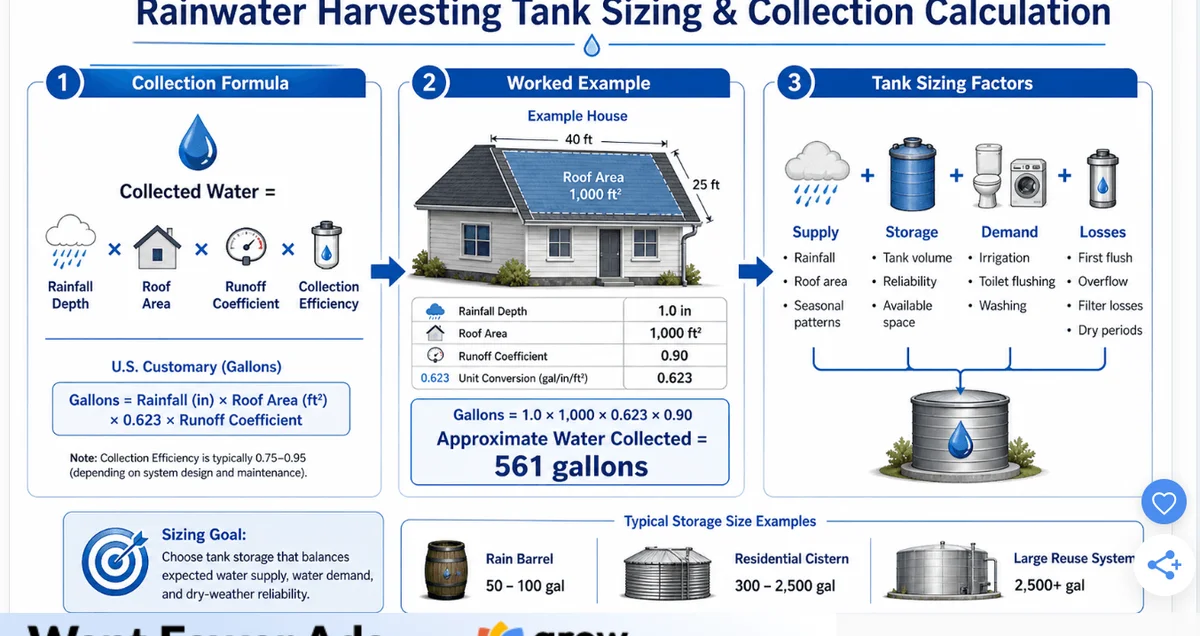
Key Formula for Rainwater Harvesting
V = P × A × C × E
Where:
- V: Estimated collected water volume
- P: Rainfall depth
- A: Roof catchment area
- C: Runoff coefficient
- E: Collection efficiency
Rainwater Harvesting Formula in U.S. Customary Units
For a quick estimate using inches and square feet:
Vgal = Pin × Aft² × 0.623 × C
Where:
- Vgal: Collected water in gallons
- Pin: Rainfall in inches
- Aft²: Roof area in square feet
- 0.623: Gallons collected per square foot per inch of rainfall
- C: Runoff coefficient
Pro tip: don’t mix up your units of measurement when you’re working out! Use the correct formula for the units you’re using to get the right answer.
Note: The U.S. customary formula uses the runoff coefficient as given in the reference; you don’t multiply by collection efficiency again unless your own calculation is specifically set out to do that separately.
For instance, a bigger roof will collect more rainwater than a smaller roof, all other things being equal.
Don’t go on the basis of one heavy rain event when choosing a storage tank. You need to consider local rainfall patterns, household demand, the length of the dry period and collection losses before you decide on the size of the tank.
Rainwater Harvesting Maintenance – Keep It Clean, Keep It Flowing!
Even the best rainwater collection system needs maintenance. If you don’t maintain it, your water-saving system will very quickly become a blockage-saving system!
- Clean the roofs and gutters prior to the monsoon.
- Remove the leaves and debris from the mesh screens.
- Clean your filters and your first flush diverters regularly.
- Inspect the storage tanks for cracks, leaks and contamination.
- Keep the tanks covered to stop insects and mosquitoes getting in.
- Check the overflow pipes and the drainage connections.
- Get the recharge structures inspected periodically.
Final Thoughts – Don’t Let Rainwater Go Down the Drain!
Water conservation isn’t just some massive government project. It can start right at your own rooftop. You can do it via rooftop rainwater harvesting, you can do it via recharge pits or you can do it via storage tanks. The objective in all cases is to collect as much as you can, waste as little as you can and use the water you have as efficiently as possible.
A well-designed rainwater harvesting system will help to reduce your water demand, assist with groundwater recharge and make better use of the seasonal rainfall.
So, next time it rains, don’t just enjoy the weather. Make every drop count!
Frequently Asked Questions About Rainwater Harvesting
1. What is a rainwater harvesting system?
A rainwater harvesting system collects, filters, and stores rainwater from rooftops or other surfaces for future use or groundwater recharge.
2. What are the main methods of rainwater harvesting?
The main methods include rooftop rainwater harvesting, recharge pits, recharge wells, trenches, check dams, and percolation tanks.
3. Is harvested rainwater safe for drinking?
Not automatically. Rainwater needs suitable filtration, disinfection, and water-quality testing before it can be considered safe for drinking.
4. What is the purpose of a first-flush diverter?
A first-flush diverter removes the initial portion of rainfall, which may contain dust, leaves, bird droppings, and other contaminants from the rooftop.
5. How often should a rainwater harvesting system be maintained?
Check and clean filters, gutters, and first-flush diverters regularly, especially before the monsoon. Storage tanks and recharge structures also need periodic inspection.
6. Can rainwater harvesting reduce water bills?
Yes. Harvested rainwater can replace municipal water for suitable uses such as gardening, washing vehicles, cleaning floors, and flushing toilets, helping reduce water consumption and bills.
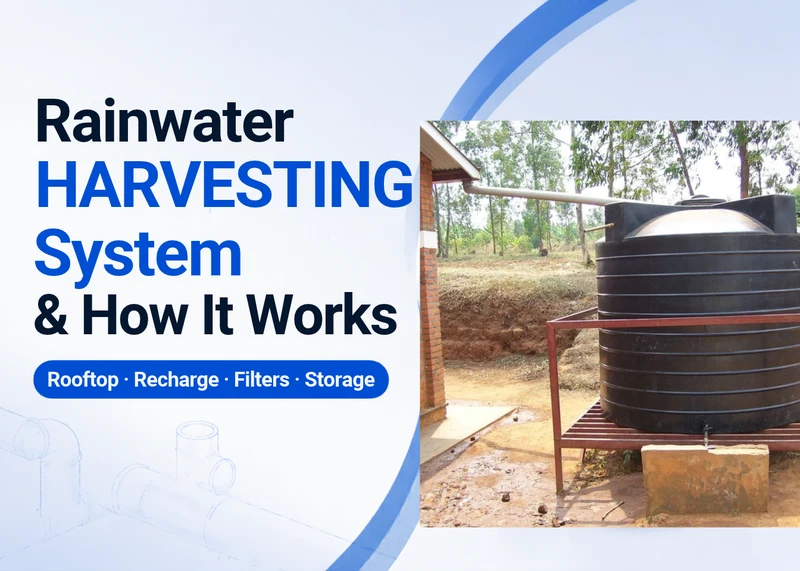
Featured photo: SuSanA Secretariat, CC BY 2.0 (Wikimedia Commons).